Published on July 9, 2025 by
Key Takeaways
- Preventing ice dams in Colorado requires sealing attic air leaks, improving insulation, and maintaining proper ventilation to stop snowmelt from refreezing at the roof edge.
- Clearing gutters, installing protective membranes, and using tools like roof rakes or heated cables can reduce the risk of water backup and roof damage.
- On Point Contracting offers tailored roof inspections and solutions that address the root causes of ice dams so your home stays dry and damage-free all winter.
6 Steps to Prevent Ice Dams Before Winter Hits
Preventing roof ice dams before winter involves proactive steps to control heat loss and manage snow buildup on your roof surface. Ice dam formation occurs when melting roof snow refreezes at the edge, causing water to back up into the home through shingles or siding.
By addressing issues in the attic space, such as warm air leaks and poor attic insulation, you can significantly lower the risk of ice dam damage. These six steps will help you protect your home before the temperature drops.
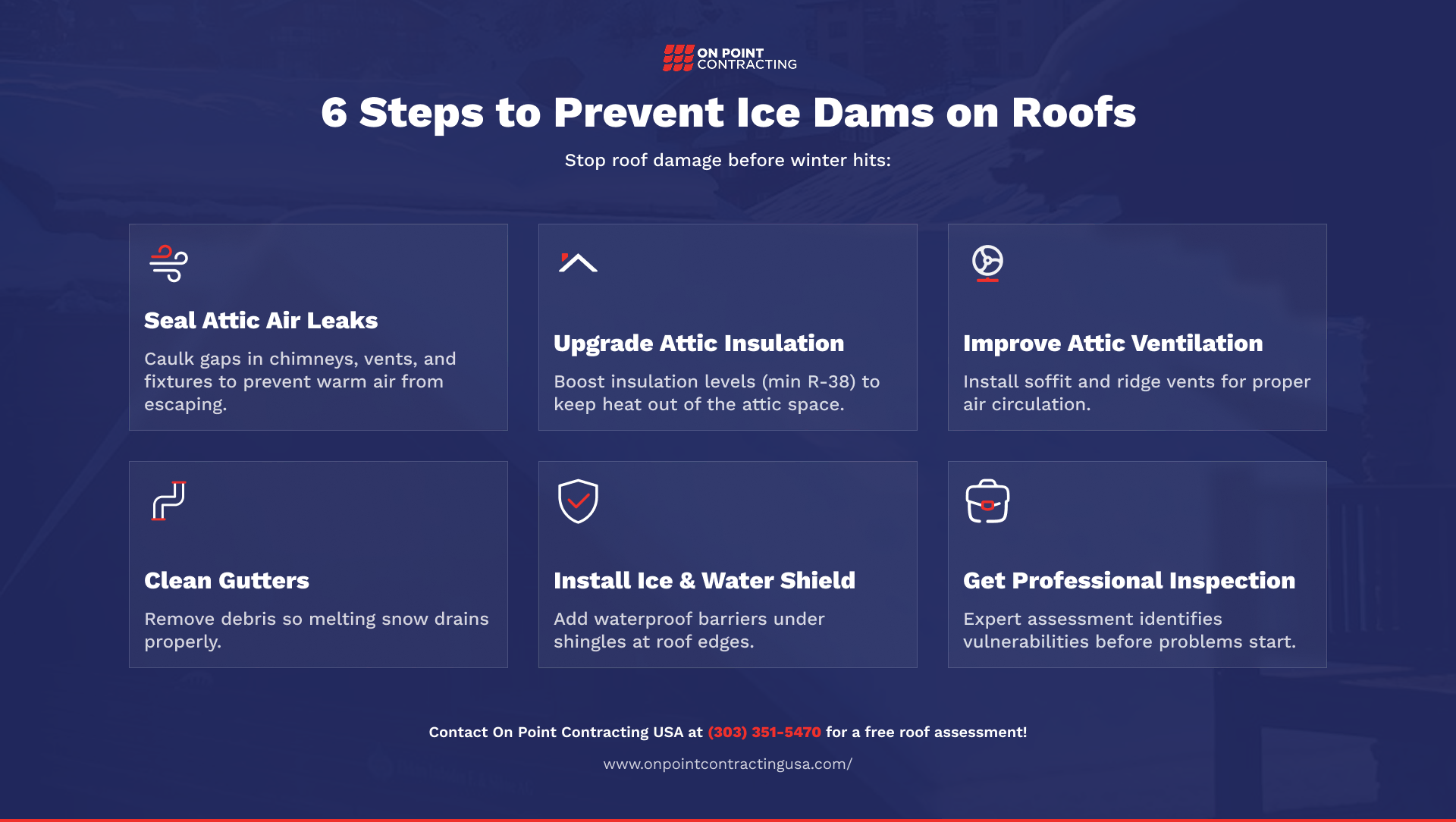
1. Seal air leaks in the attic
Warm air from your home can escape into the attic space through openings near chimneys, exterior walls, light fixtures, and vent pipes. This rising heat warms the roof surface and triggers melting roof snow, which leads to roof ice dams when it refreezes near the eaves.
Seal these leaks using caulk or spray foam to maintain consistent attic temperatures.
2. Add or upgrade attic insulation
Insufficient attic insulation allows too much warm air into the attic space, contributing to uneven roof temperatures. Boosting insulation levels (minimum R-38) helps keep warm air out of the attic and reduces the chances of ice dam formation. This also improves energy efficiency throughout the home.
3. Improve attic ventilation
Balanced ventilation in the attic space regulates temperature and moisture. Properly placed roof vents, such as soffit and ridge vents, keep cold air circulating and prevent localized warming that causes melting roof snow. This is key in avoiding both ice dam formation and condensation issues.
4. Clean gutters and downspouts
Gutters blocked with leaves or debris trap water instead of letting it drain away from the roof surface. When that water freezes, it provides a base for roof ice dams to grow. Clearing out gutters and downspouts allows melting roof snow to flow off the roof properly.
5. Install ice and water shield membranes
These waterproof barriers are installed beneath shingles, especially along exterior walls, valleys, and eaves, where roof ice dams typically form.
They prevent water from penetrating the roof deck during an ice dam formation event. This added layer of protection is critical in reducing the risk of interior leaks.
6. Call a professional for inspection
If you’re uncertain about your attic space, ventilation setup, or attic insulation, a professional inspection can identify weaknesses. Contact On Point Contracting for a free roof assessment. Their team will check for conditions that lead to roof ice dams and recommend solutions tailored to your home.
Why Ice Dams Are a Bigger Threat in Colorado Homes Than You Think
Ice dams are a bigger threat in Colorado homes than many homeowners realize. The state’s mix of heavy snowfalls, bright sun, and wide daily temperature swings creates ideal conditions for ice dam formation. These blockages may seem minor, but they can lead to serious structural and water damage if ignored.
Homes in Colorado often have complex rooflines and insufficient attic ventilation, which makes them more prone to roof ice dams. Melting roof snow refreezes along the eaves, forcing water backward under shingles. Over time, this leads to interior leaks, soaked insulation, and even mold inside the attic space.
Roof ice dams also tend to form repeatedly on the same areas of the roof surface, especially above poorly insulated ceilings or along exterior walls. If a home lacks proper attic insulation or has warm air leaks, the problem compounds each season. Without correction, this cycle causes damage year after year.
Because Colorado’s sunny afternoons often melt snow rapidly, many homeowners overlook the danger. But when night temperatures drop, the water freezes again, feeding both ice dam formation and roof deterioration. If not addressed early, repairs can become far more expensive than prevention.
Which Ice Dam Prevention Tool Is Right for Your Home?
Choosing the right ice dam prevention tool depends on your home’s design, insulation levels, and exposure to snow and sun. The most effective strategy often involves combining several tools to control heat loss and manage snow on your roof. Here’s a breakdown of the most reliable options, what they do, and when to use them.
- Ice and water shield membranes
Installed under shingles, especially near roof edges and valleys. These waterproof barriers prevent leaks if ice dams form.
Best for homes with older roofs or where leaks have occurred near eaves or low slopes. - Heated roof cables
Electric cables installed along the roof edge or in gutters. They melt channels in snow and ice to allow proper drainage.
Best for homes with persistent ice dams in specific areas, such as north-facing rooflines or above unheated porches. - Attic insulation
Adding or upgrading insulation (R-38 or higher) keeps warm air from heating the roof surface, reducing snowmelt.
Best for homes where energy bills are high or the attic space is unusually warm during winter. - Air sealing
Sealing gaps in the attic space around vents, chimneys, and light fixtures. This stops warm air from leaking upward and causing uneven roof temperatures.
Best for homes with visible frost in the attic or signs of heat escaping through ceiling fixtures. - Ridge and soffit vents
Promote consistent airflow in the attic to maintain cold roof temperatures. Proper ventilation helps prevent melting roof snow from turning into roof ice dams.
Best for homes with little or no attic ventilation or when upgrading insulation. - Roof rake
A manual snow removal tool with a long handle. It lets you clear snow from the roof’s lower sections to prevent ice buildup.
Best for homes after heavy snowfalls or where ice dams form quickly due to deep snow accumulation. - Professional inspection
Experts like On Point Contracting can evaluate your roof and attic. They offer tailored prevention plans based on your home’s unique layout and exposure.
Best for homeowners unsure of what’s causing ice dams or who want a full prevention strategy in place before winter.
Gutter Maintenance Tips to Prevent Ice Dams and Protect Your Roof
Keeping your gutters clean and functional is a key part of preventing ice dams and protecting your roof. When gutters are clogged, water from melting roof snow has nowhere to go and instead refreezes along the roof edge, increasing the risk of roof ice dams.
Proper gutter maintenance ensures water drains off the roof surface as intended. This minimizes ice dam formation and protects both your shingles and attic space from potential water damage. Here are practical tips to keep your gutters in top shape before winter hits.

- Clear debris before the first snow
Leaves, twigs, and dirt block water flow and cause overflow during freezes. Clean gutters thoroughly in late fall to allow melting snow to drain properly. - Check for sagging or damage
Loose or uneven gutters can trap water and lead to ice buildup. Repair or replace sections that are pulling away from the roof or showing signs of wear. - Ensure downspouts are open and draining
Downspouts should extend at least 4 feet away from the home. This prevents water from pooling near the foundation and reduces roof ice dam risks. - Install gutter guards
These mesh or screen covers help prevent debris from entering the gutters while still allowing water through. They reduce the frequency of cleanings and help maintain water flow. - Add heat tape if needed
In homes prone to recurring gutter freezes, heated cables can keep water flowing through critical sections. This is especially useful in valleys or where gutters receive a lot of runoff. - Inspect gutters after every major snow or thaw
Ice and heavy snow can bend or block gutters. Check that water is draining and remove any visible ice buildup to prevent long-term damage.
Regular attention to your gutters can prevent costly repairs and keep your entire roof system working as it should. For a full roof and gutter inspection, reach out to On Point Contracting and make sure your home is winter-ready.
Stop Ice Dams Before They Start With Smart Roof Prep
Ice dams are more than just a winter nuisance for Colorado homeowners. They can lead to major roof leaks, water damage, and mold if ignored. The good news? You can stop them before they start.
At On Point Contracting, we help you prevent ice dams by sealing attic air leaks, upgrading insulation, improving ventilation, and maintaining clear, functional gutters. Our team also installs protective barriers and offers professional inspections so your home stays dry all winter long.
Here’s what to do next:
- Check your attic for warm air leaks or low insulation, especially near exterior walls and ceilings.
- Clean your gutters and downspouts before the first snow to make sure water can flow off the roof.
- Schedule a free inspection with On Point Contracting to get expert recommendations tailored to your roof.
Don’t wait until snow starts piling up. Contact On Point Contracting now and get your home ready for winter the right way.