Published on July 18, 2025 by
Key Takeaways
- Re-roofing is a quicker, more affordable option that only works if your roof has a single layer of shingles in good condition without underlying damage.
- A full roof replacement is necessary when there are multiple layers, widespread damage, or structural issues like sagging or persistent leaks.
- On Point Contracting helps homeowners choose the right solution with thorough inspections and expert recommendations based on roof condition, safety codes, and long-term value.
Comparing Re‑Roofing vs Roof Replacement
Re-roofing and roof replacement differ primarily in how much of the existing roof system is removed and rebuilt. Re-roofing is a quicker, less expensive way to restore a roof, while roof replacement is a full structural overhaul that provides longer-term durability.
Re-roofing involves layering new shingles over the existing ones, which saves time and labor costs. However, it only works if the existing roof is in generally good condition and has only one layer of shingles. On the other hand, roof replacement involves removing the entire existing roofing system down to the deck. This allows for a full inspection and repair of underlying issues like rot or water damage.
If you’re weighing these options, On Point Contracting is a trusted local roofing contractor that offers both re-roofing and complete roof replacement services. They work with high-grade roofing materials, including asphalt shingles, and can help you decide based on your existing roof’s condition, long-term needs, and overall roof replacement cost.
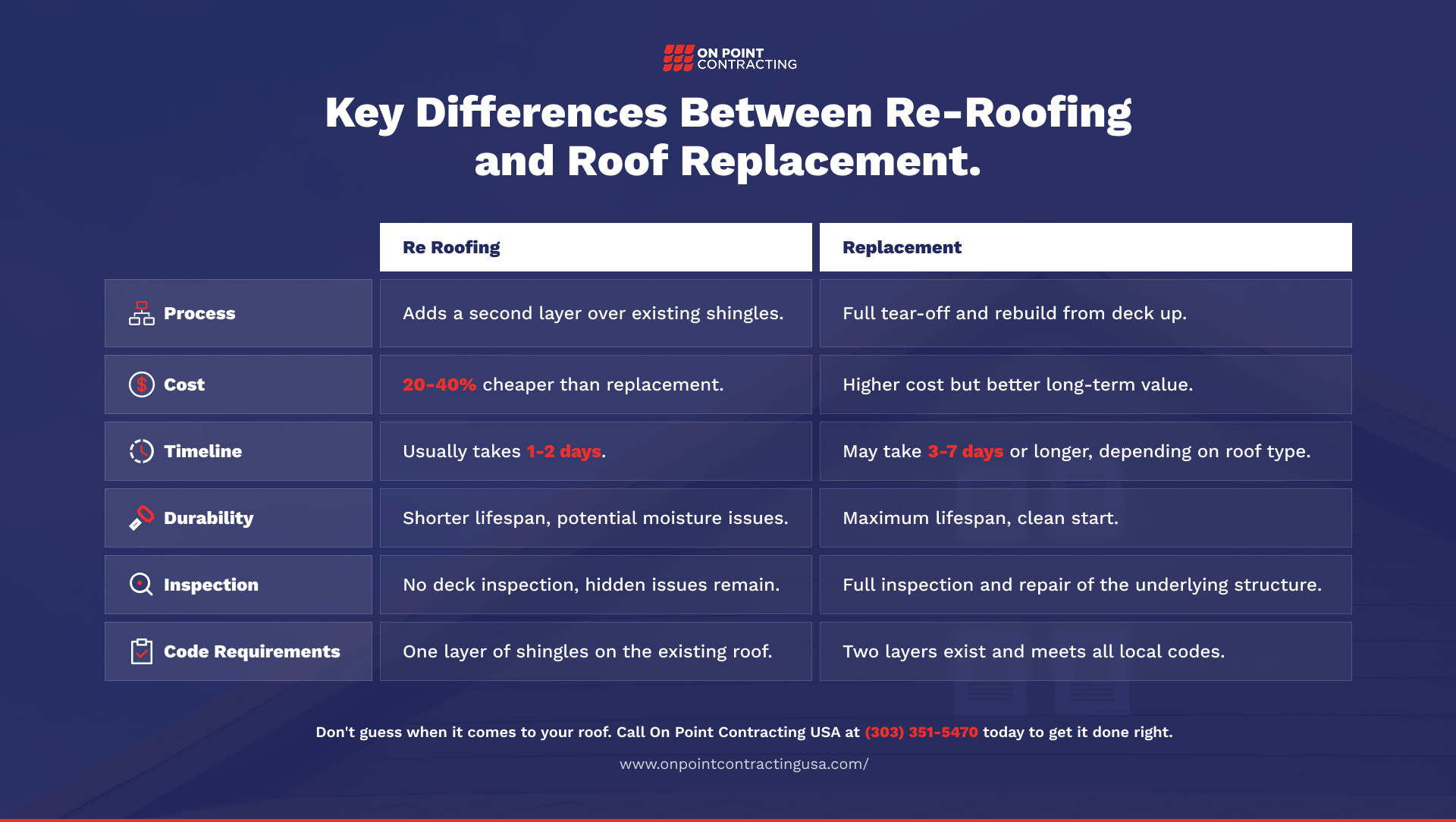
Below is a more detailed comparison between the two processes.
Process
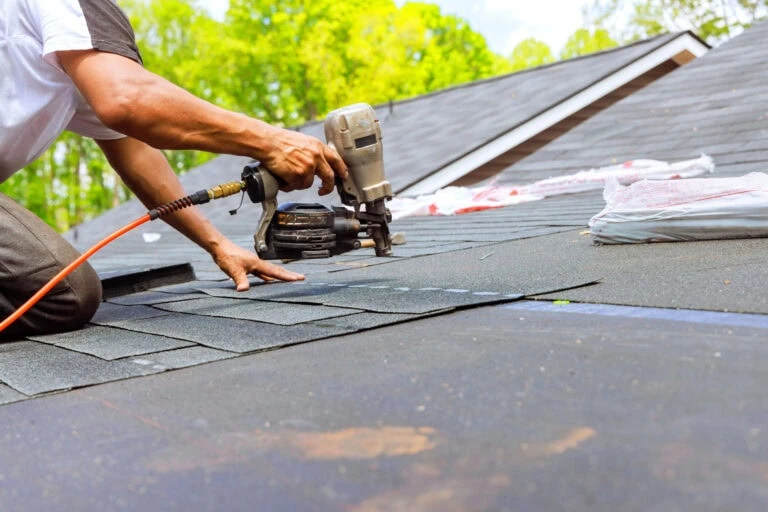
Re-roofing adds a second layer of asphalt shingles over your existing roof. It does not require tearing off old materials, so it’s faster and less intrusive.
Roof replacement involves a full tear-off of the current roofing system. All layers are removed and replaced with new roofing materials, underlayment, and flashing.
Cost
Re-roofing is typically 20 to 40 percent cheaper than full replacement. Lower labor and disposal costs keep the roof replacement cost down.
Roof replacement is more expensive because it includes the complete removal and disposal of the old roofing materials. You also pay for any structural repairs and a full new roof installation.
Timeframe
Re-roofing usually takes 1 to 2 days. It’s a quicker fix with fewer labor hours.
Roof replacement can take 3 to 7 days or longer. Timing depends on roof size, pitch, and if structural repairs are needed under the existing roof.
Durability
Re-roofing has a shorter lifespan. Adding new shingles on top of an old surface can trap moisture and cause early wear.
Roof replacement gives you a clean start. It maximizes the life of your new asphalt shingle roof and improves the overall performance of the roofing system.
Inspection and Repairs
Re-roofing does not expose the roof deck. Any rotted decking or hidden damage remains unresolved.
Roof replacement allows for complete inspection and repair of the underlying structure. This ensures the new roof is built on a solid foundation.
Code and Layer Limitations
Re-roofing can only be done if there’s one layer of shingles on the existing roof. Most building codes prohibit a third layer.
Roof replacement is required when two layers already exist. It meets all local codes and resets the roofing system to like-new condition.
5 Signs You Actually Need a Full Roof Replacement
Knowing when to replace your roof is critical to avoid significant damage and escalating repair costs. While small leaks or missing shingles can sometimes be patched, there are times when re-roofing just won’t cut it. A full roof replacement becomes necessary when the existing roof can no longer protect your home reliably or safely.
Here are five clear signs it’s time to stop patching and start planning for a complete roof replacement.
1. Your Roof Has Multiple Layers of Shingles
If your roof has already been re-roofed once, it likely has two layers of asphalt shingles. Most building codes prohibit a third layer due to the added weight and fire risk. Trying to install another layer would violate code, shorten the lifespan of the roofing system, and increase the risk of heat and moisture being trapped between layers.
A full tear-off is required to restore ventilation and meet safety regulations.
2. Shingle Damage Covers Large Sections
It’s normal for a few shingles to go missing in a storm, but widespread issues are a different story. If large sections show curling, cracking, blistering, or granule loss, your asphalt shingles are no longer protecting the roof.
These issues often signal UV damage, heat exposure, and age-related deterioration that affects the entire surface. Repairs won’t stop the decline. A new roof is the only solution that resets the entire system.
3. The Roof Deck is Sagging or Feels Spongy
Walking on your roof and noticing soft spots, bounce, or visible sagging lines is a serious concern. This usually points to rot or long-term water infiltration beneath the shingles and underlayment.
The deck might be weakened to the point where it can’t support the weight of new roofing materials. In this case, full roof replacement is necessary to inspect, repair, or replace the structural base before new shingles are installed.
4. Leaks Keep Coming Back
If you’ve repaired leaks more than once and they keep returning in different areas, it’s a red flag. Water stains on ceilings or bubbling paint indicate chronic moisture intrusion that may have compromised insulation, rafters, or drywall.
Temporary patching won’t fix the underlying failure in the roofing system. A full roof replacement allows for complete inspection, waterproofing, and the chance to upgrade flashing and ventilation.
5. The Roof is Over 20 Years Old
Even if it looks fine from the ground, an asphalt shingle roof over 20 years old has likely outlived its design life. Materials break down over time, especially in extreme weather zones.
Flashing may have corroded, sealants may have dried out, and shingles may have lost their ability to shed water effectively. Instead of waiting for visible failure, proactively replacing the roof avoids emergency costs and helps maintain the value of your home.
When Does Re‑Roofing Make Sense?
Re-roofing makes sense when your existing roof is still structurally sound but starting to show visible wear. It’s a practical, cost-saving option for homeowners who want to refresh the look and extend the life of their roof without a full replacement. However, it only applies under specific conditions and isn’t always the right move.
Here are five situations where re-roofing is a smart and effective decision.
1. The Existing Roof Has Only One Layer of Shingles
Re-roofing can only be done if your roof has a single layer of asphalt shingles. Building codes typically forbid adding a third layer due to weight and fire safety concerns. If your home has never been re-roofed before and the shingles underneath are still lying flat, you may be a good candidate.
This allows contractors to install new roofing materials over the existing roof without stripping it down.
2. There’s No Major Water Damage or Rot
If the underlying deck and structure are dry, flat, and intact, re-roofing becomes a viable option. It’s important that there are no signs of mold, leaks, or rotting wood beneath the surface. Re-roofing skips the tear-off, so problems hidden under the shingles can’t be addressed.
If a roof inspection confirms the base roofing system is in good shape, this option saves time and avoids unnecessary labor.
3. You’re Dealing with Cosmetic Aging, Not Structural Failure
Re-roofing is perfect when the issue is mostly about looks. Asphalt shingles may fade, lose granules, or appear aged after 15 to 20 years, even if they’re not actively leaking.
If your main concern is restoring curb appeal without breaking your budget, re-roofing provides a visual upgrade without the full roof replacement cost.
4. You Need a Quick, Budget-Friendly Fix
When time or finances are tight, re-roofing can extend the life of your current roof by 10 to 15 years. It requires fewer materials and less labor, which lowers the total expense. It’s ideal for short-term homeowners or anyone planning to sell soon who needs a functional, presentable roof without investing in a brand-new roofing system.
5. You’ve Already Consulted a Professional
Before going ahead with any re-roofing project, it’s essential to have a licensed roofing contractor inspect your existing roof. Companies like On Point Contracting will confirm whether your roof qualifies for re-roofing or if deeper issues make a full replacement necessary. Our expertise ensures you don’t waste money on a surface fix that won’t hold up.
How to Choose Between Re‑Roofing and Replacement
Choosing between re-roofing and full roof replacement depends on more than cost or surface appearance. It’s about the condition of the entire roofing system, from the shingles to the deck, and how long you want your investment to last. While re-roofing can be effective in the right scenario, a full replacement may be necessary to address hidden damage and aging roofing components.
Here’s a full guide to help you decide which option fits your situation:
1. Check for Multiple Layers of Shingles
If your roof already has two layers of shingles, re-roofing is not an option. Most building codes prohibit adding a third layer due to structural weight and fire risk. A full tear-off is required to install new materials safely and legally.
If your roof has only one existing layer in good condition, re-roofing may be considered.
2. Inspect the Condition of the Existing Layer
Re-roofing depends on the quality of what’s already in place. If the existing layer is lying flat, with no curled shingles, missing tabs, or soft spots, it may provide a sound base. But any visible sagging or bubbling suggests problems below the surface, which only roof replacement can correct.
3. Evaluate Water Damage and Roof Deck Integrity
Soft decking, ceiling leaks, and visible water stains inside the home point to issues below the roof covering. Re-roofing won’t fix damaged plywood or soaked underlayment. These types of problems need full removal to repair or replace the affected roofing components before applying new materials.
4. Know Your Roofing Type and Material Compatibility
Asphalt roof systems are commonly re-roofed, but metal roofs and specialty systems usually require full replacement due to how the materials attach and function. Mixing new materials over an older metal roof or a misaligned surface can cause ventilation issues and poor performance.
5. Understand the Visual and Long-Term Tradeoffs
Re-roofing won’t provide the same sleek look as a complete replacement. Placing shingles over an old asphalt roof can result in uneven surfaces, especially if the existing layer is deteriorated. Full replacement gives a cleaner, more uniform appearance that improves curb appeal and resale value.
6. Consider Your Future Plans
If you plan to sell in the next few years, re-roofing may be a cost-effective way to restore appearance and function quickly. But if you intend to stay for the long haul, investing in a full roof replacement avoids layered complications and extends your roof’s lifespan by 20 to 30 years.
7. Get a Professional Inspection
Most roofing contractors, including On Point Contracting, offer detailed inspections to assess if your existing roof is a candidate for re-roofing. They evaluate how many layers you have, identify hidden roofing issues, and help you choose between a new roof installation or a re-cover using new materials.
Choosing the right approach protects not just your home but your long-term investment. Rely on qualified professionals to inspect your current setup and make sure your roof covering does more than just look good.
How On Point Contracting Helps You Make the Right Roofing Call
Choosing between re-roofing and full roof replacement is a big decision that impacts your home’s protection and long-term value. Re-roofing can be quicker and more affordable, but it’s only right under the right conditions. Full replacement costs more but ensures a stronger, longer-lasting fix, especially when your roof has hidden damage or multiple layers.
At On Point Contracting, we guide you through this choice with clear, honest inspections. Whether your roof just needs a refresh or a full reset, we’ll make sure you don’t waste money on the wrong solution. We use quality materials, assess the structure underneath, and follow all building codes so your new roof lasts for decades.
Here’s what to do next:
- Check your roof’s condition. Look for leaks, sagging, or multiple shingle layers that might call for a full replacement.
- Decide what matters most—cost, time, or long-term durability—to see which option fits your plans.
- Schedule a professional roof inspection with On Point Contracting to get clear, expert guidance on your next best step.
Don’t guess when it comes to your roof. Call On Point Contracting today to get it done right.